
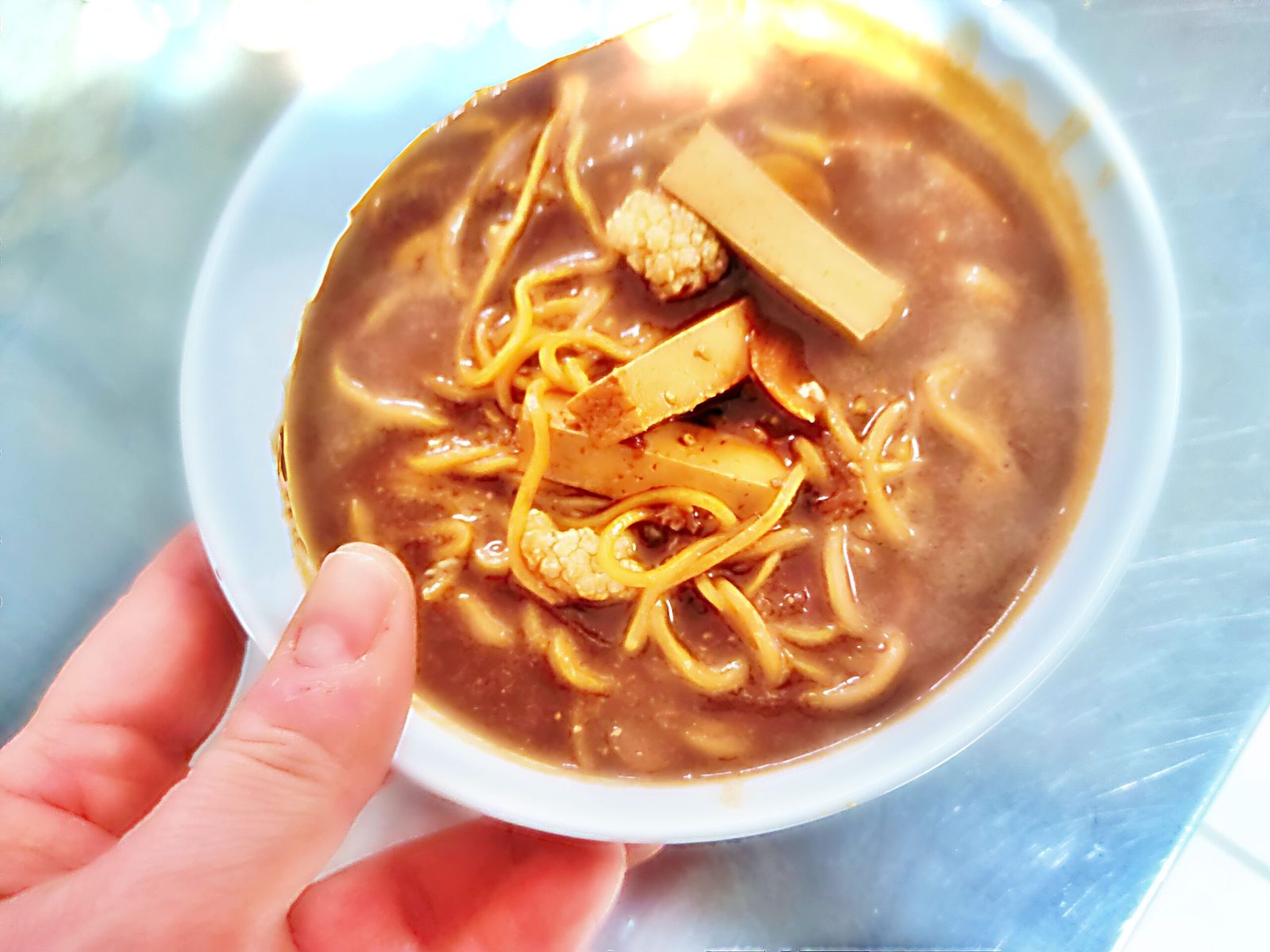
Ingredients
- vegetable broth — 1000 ml
- rapeseed oil — 30 g
- red miso paste — 200–250 g
- cauliflower — 300 g
- sauerkraut / kimchi juice — 300 ml
- smoked tofu — 200 g
- chow mein noodles — 125 g
- shallots — 100 g
- garlic — 15 g
- water (top-up) — 500 ml
- chili — to taste
Preparation
- Add the miso and oil to the broth and stir, preferably with a whisk, over low heat until the miso dissolves. It’s best to start with 200 g of miso and add more if needed.
- Slice the shallots thinly and add them to the broth.
- Cut the tofu into strips. I happened to have smoked tofu, so that’s what went in.
- Crush or finely chop the garlic and leave it for a few minutes. This is very important, so the garlic can develop its antibacterial properties.
- Divide the cauliflower into fairly small florets.
- Add the cauliflower, tofu and chili (fresh or dried) to the broth.
- Cook over low heat until the cauliflower is al dente. Add the noodles and take the soup off the heat for five minutes.
- Finally pour in the sauerkraut / kimchi juice. I used half and half. It’s important that it’s good-quality cabbage with live cultures.
- Top up with water or add miso along the way if needed. Better to start with less paste (150–200 g) and add more. Or the other way round, if the soup is too strong or gets too thick once the noodles soak up the water. I added another half litre of water to my pot.
Variations
This soup was made from whatever I had to hand in the fridge. I only had smoked tofu, for example; plain or any other tofu works just as well. You can fry the tofu before adding it, especially plain tofu. You can also use tempeh or yuba.
Chili and fresh coriander are optional. Instead of cauliflower you can use another vegetable.
Sprouts are perfect in this kind of soup. Add them just before taking the soup off the heat so they don’t overcook, or when serving.
Of course you can use another Asian-style noodle, or no noodles at all.
The sauerkraut / kimchi juice at the end is also something I happened to have plenty of, from several 2.5-litre jars of kimchi and sauerkraut. You can use lime and orange juice instead. You can also add sauerkraut or kimchi to the soup itself.
Notes
I used my own 100% plant broth, cooked for several hours. It’s very intense and needs a lot of miso to be dominated. With most broths, less paste will be enough.
It’s also important not to overcook the vegetables. The ingredients should be al dente and keep their flavours and textures.
Serving
Serve Asian-style with chopsticks or European-style, depending on how you can / like to eat. When serving, you can sprinkle the soup with fresh coriander and mint and add a squeeze of citrus.
Nutrition
A 500 ml serving of soup has 320 kcal and 14.5 g of protein.
Plan ahead
CE = Christmas Eve, 24 December.
- CE: cook fresh, about 35 min. The noodles go soft, so cook just before serving. The broth can be made on CE-1.
How much for how many
Base recipe: 4 portions. At a table with 12 dishes, the same amount feeds about 3× as many people.
| Ingredient | 4 ppl | 6 ppl | 8 ppl | 12 ppl |
|---|---|---|---|---|
| vegetable broth | 1000 ml | 1500 ml | 2000 ml | 3000 ml |
| rapeseed oil | 30 g | 45 g | 60 g | 90 g |
| red miso paste | 250 g | 380 g | 500 g | 750 g |
| cauliflower | 300 g | 450 g | 600 g | 900 g |
| sauerkraut / kimchi juice | 300 ml | 450 ml | 600 ml | 900 ml |
| smoked tofu | 200 g | 300 g | 400 g | 600 g |
| chow mein noodles | 125 g | 190 g | 250 g | 380 g |
| shallots | 100 g | 150 g | 200 g | 300 g |
| garlic | 15 g | 23 g | 30 g | 45 g |
| water (top-up) | 500 ml | 750 ml | 1000 ml | 1500 ml |
Storage
Fridge: 2–3 days, the noodles go soft. Freezer: only without the noodles.
Allergens
soy (miso, tofu), gluten (noodles; miso is sometimes made with barley), celery (if the broth has celery). CAUTION: chow mein noodles often contain egg — check the label.
On the Christmas Eve table
Soup, served hot. Similar flavours: Advent Soup; Cicer cum caule; Rich Cabbage with Mushrooms (pierogi filling); Pierogi with TVP and Kimchi. Better not to put them all on one table.